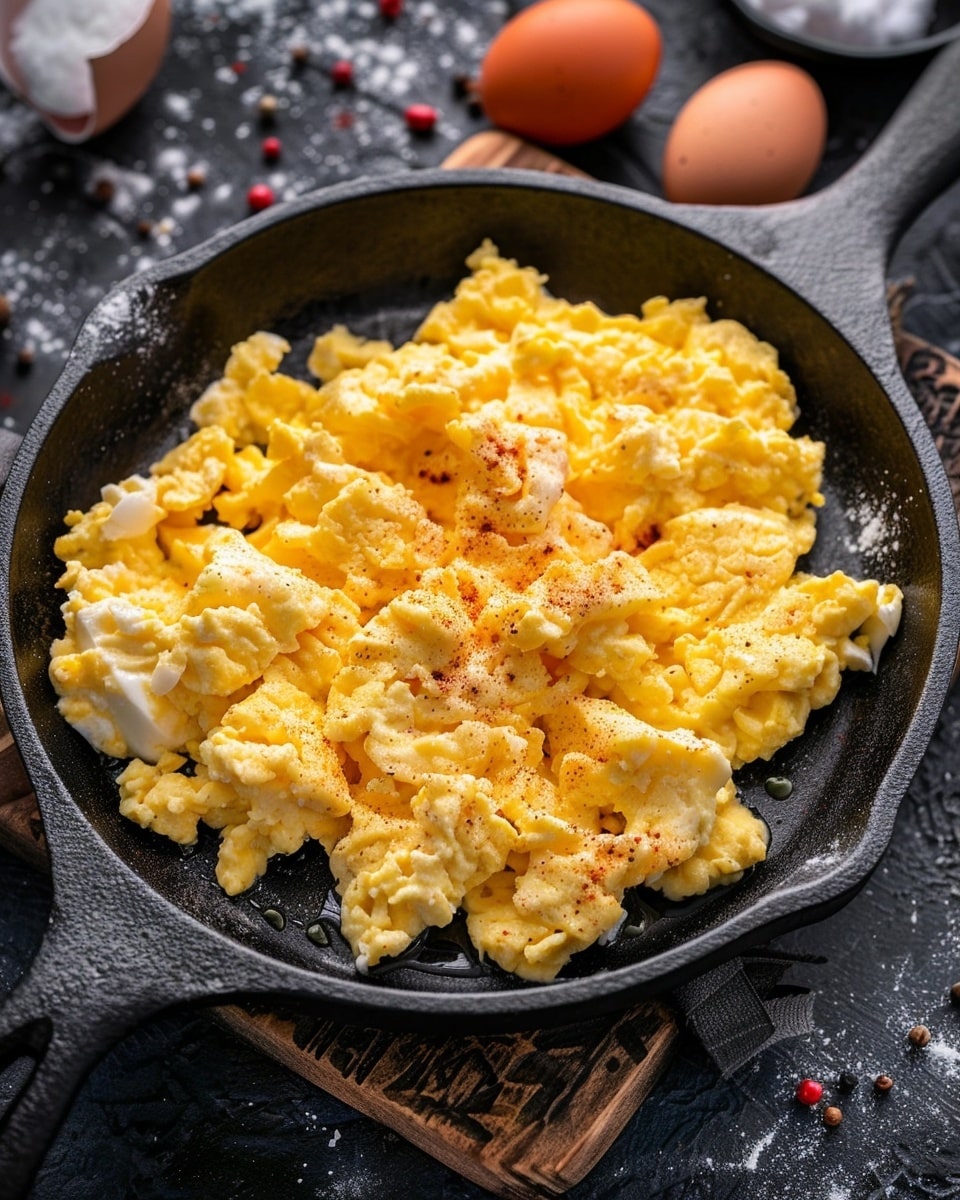
There’s something deeply comforting about a plate of soft, fluffy scrambled eggs in the morning. With just a few simple ingredients and the right technique, you can create large, pillowy curds that are rich, tender, and melt-in-your-mouth delicious. This method focuses on vigorous whisking, gentle heat, and a touch of milk and butter to achieve the perfect texture every time.
Why You’ll Love This Recipe
These scrambled eggs are light, airy, and full of flavor. By whisking the eggs thoroughly with milk and salt, you incorporate air that helps create fluffy, delicate curds. Cooking them slowly over medium-low heat ensures they stay soft and moist rather than dry or rubbery.
You’ll also love how customizable this recipe is. Whether you prefer cheese, sautéed vegetables, fresh herbs, or leftover cooked meats, these eggs make a perfect base for a quick and satisfying breakfast. Best of all, they come together in just minutes with minimal cleanup.
Ingredients
(Tip: You’ll find the full list of ingredients and measurements in the recipe card below.)
1/2 tablespoon unsalted butter
2 large eggs
1 tablespoon whole milk
1/8 teaspoon salt
1/8 teaspoon freshly cracked black pepper
2 tablespoons optional mix-ins such as shredded cheese, finely chopped herbs, or pre-cooked vegetables
Directions
Melt the butter
Place a small non-stick skillet over medium heat. Add the butter and let it melt completely, coating the bottom of the pan.
Whisk the eggs
Crack the eggs into a small mixing bowl. Add the whole milk and salt. Using a whisk, beat the mixture vigorously until the yolks and whites are fully combined and slightly foamy. The mixture should be uniform in color with no streaks remaining.
Cook gently
Pour the egg mixture into the hot skillet. Immediately reduce the heat to medium-low. Let the eggs sit for a few seconds until they begin to set around the edges.
Form fluffy curds
Using a rubber spatula, gently push the eggs from one side of the skillet to the other. Continue pushing and folding slowly, allowing the uncooked egg to flow into the empty spaces. This motion helps create large, soft curds.
Add mix-ins
When the eggs are mostly set but still appear slightly glossy and moist, gently fold in any cheese, herbs, or pre-cooked vegetables. Stir just enough to combine and warm them through.
Remove from heat
Take the eggs off the heat when they are set but still glistening with moisture. They will continue to cook slightly from residual heat. Sprinkle with freshly cracked black pepper and serve immediately.
Servings and timing
Servings: 1
Preparation time: 5 minutes
Cooking time: 5 to 7 minutes
Total time: 10 to 12 minutes
Variations
Cheesy scrambled eggs
Stir in 2 tablespoons of shredded cheddar, mozzarella, or feta during the final minute of cooking for extra richness.
Herb-infused eggs
Add 1 tablespoon of finely chopped fresh chives, parsley, or basil at the end for a fresh flavor boost.
Vegetable-loaded eggs
Fold in 2 to 3 tablespoons of sautéed spinach, mushrooms, sweet peppers, or tomatoes for added texture and nutrition.
Protein-packed breakfast
Mix in 2 tablespoons of cooked diced chicken sausage or ground beef that has been fully cooked and drained.
Creamier texture
Substitute the whole milk with 1 tablespoon of heavy cream for an even softer, richer scramble.
Storage/Reheating
Storage
Allow the scrambled eggs to cool completely before transferring them to an airtight container. Store in the refrigerator for up to 3 to 4 days.
Reheating on the stovetop
Melt a small amount of butter in a skillet over medium-low heat. Add the eggs and gently press and stir them with a spatula for about 2 to 3 minutes until warmed through.
Reheating in the microwave
Place the eggs in a microwave-safe dish. Cover loosely and heat in 20-second intervals, stirring between each interval, until heated through. Avoid overheating to prevent dryness.
Freezing
Scrambled eggs can be frozen in an airtight container for up to 1 month. Thaw overnight in the refrigerator before reheating gently.
FAQs
How do I make my scrambled eggs fluffier?
Whisk the eggs vigorously until foamy and cook them slowly over medium-low heat. The added air and gentle cooking create large, airy curds.
Why should I add milk to scrambled eggs?
Milk adds moisture and a bit of fat, which helps produce softer, more tender eggs.
Can I use water instead of milk?
Yes, water can be used. It will still create steam and help with fluffiness, though the eggs may be slightly less rich.
What is the best pan for scrambled eggs?
A non-stick skillet works best because it prevents sticking and allows the eggs to slide easily as you push and fold them.
How do I prevent scrambled eggs from becoming rubbery?
Cook them over medium-low heat and remove them from the pan while they are still slightly glossy. Overcooking causes dryness and a rubbery texture.
When should I add cheese?
Add cheese when the eggs are mostly set but still moist. This allows the cheese to melt without overcooking the eggs.
Can I prepare the egg mixture ahead of time?
Yes, you can whisk the eggs and store them covered in the refrigerator for up to 24 hours. Add salt and milk just before cooking for best results.
Why are my scrambled eggs watery?
Watery eggs can result from high heat or adding vegetables that release moisture. Always pre-cook vegetables before mixing them in.
Can I double this recipe?
Yes, simply double the ingredients. You may need a slightly larger skillet and a bit more cooking time.
How do I know when scrambled eggs are done?
They should be fully set with no raw liquid remaining, but still glossy and soft. The curds should be tender and slightly moist.
Conclusion
Fluffy scrambled eggs are a simple yet satisfying breakfast staple. With proper whisking, gentle heat, and careful timing, you can achieve soft, pillowy curds that are rich and full of flavor. Whether enjoyed plain or enhanced with your favorite mix-ins, this recipe delivers consistent, delicious results every time.
Soft, fluffy scrambled eggs made with butter, milk, and gentle heat for large, tender curds that are rich, moist, and melt-in-your-mouth delicious. Perfect for a quick and customizable breakfast.
Place a small non-stick skillet over medium heat. Add the butter and let it melt completely, coating the bottom of the pan.
Crack the eggs into a small mixing bowl. Add the whole milk and salt. Whisk vigorously until fully combined and slightly foamy with no streaks remaining.
Pour the egg mixture into the skillet and immediately reduce the heat to medium-low. Let the eggs sit briefly until they begin to set around the edges.
Using a rubber spatula, gently push the eggs from one side of the skillet to the other, folding slowly to form large, soft curds while allowing uncooked egg to flow into empty spaces.
When the eggs are mostly set but still slightly glossy, gently fold in any optional mix-ins and stir just enough to combine.
Remove from heat while the eggs are still moist and glistening. Sprinkle with freshly cracked black pepper and serve immediately.
Notes
Whisking the eggs thoroughly incorporates air for fluffier curds.
Cook over medium-low heat to prevent dryness and rubbery texture.
Remove eggs from heat while slightly glossy; residual heat will finish cooking them.
Pre-cook vegetables before adding to prevent watery eggs.
For a richer texture, substitute milk with heavy cream.
Store leftovers in an airtight container in the refrigerator for up to 3 to 4 days.