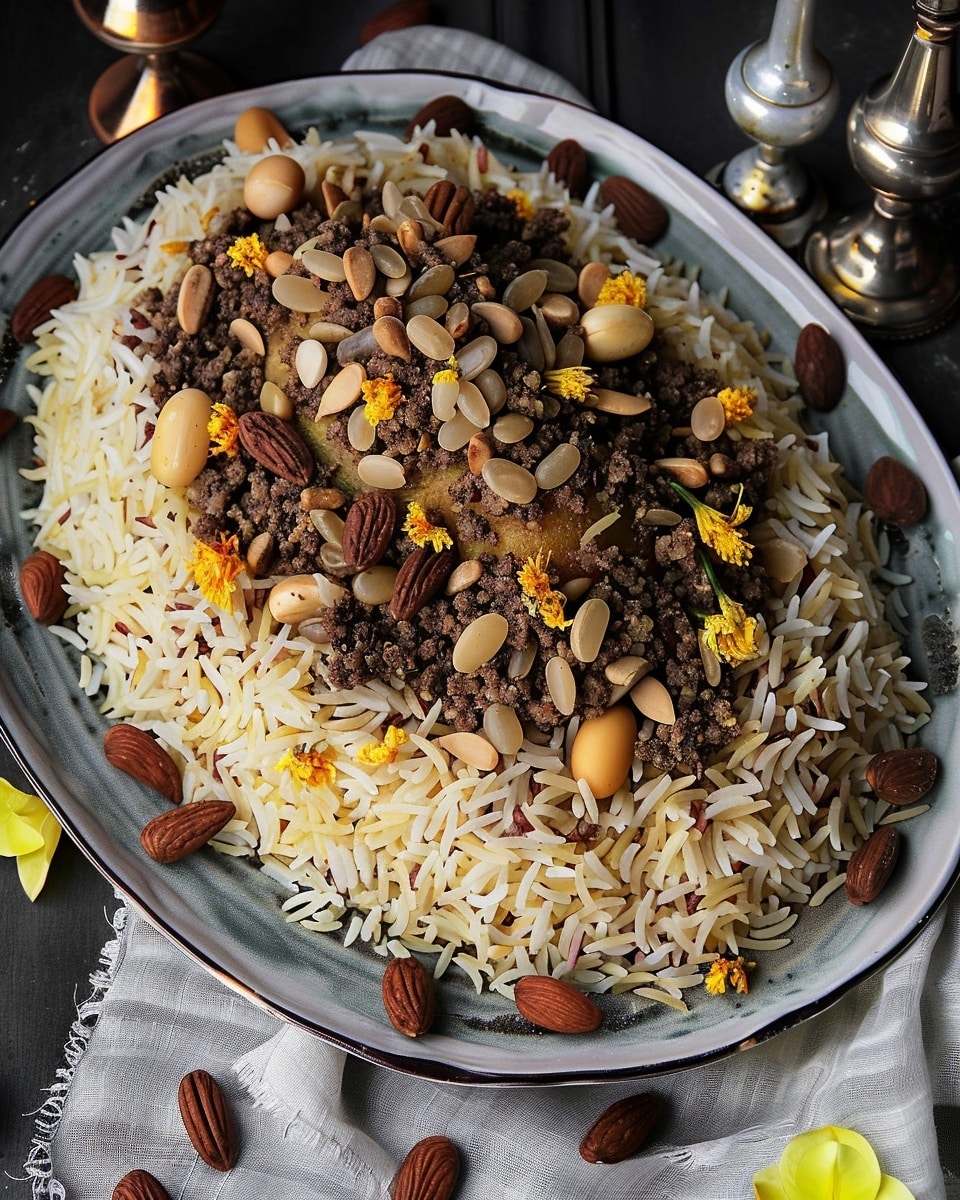
Hashweh is a comforting Middle Eastern rice dish made with fragrant basmati rice, seasoned ground beef, and warm spices. Traditionally used as a stuffing for chicken or vegetables, this flavorful rice can also be served as a hearty one-pot meal. Garnished with toasted nuts and fresh parsley, it offers a perfect balance of savory richness and aromatic spices.
Why You’ll Love This Recipe
This dish is simple, satisfying, and full of rich Middle Eastern flavors. It requires only a handful of pantry ingredients yet delivers a deeply aromatic and comforting meal.
One of the best things about hashweh is its versatility. It can be served as a main dish, a side dish, or even used as a stuffing for roasted poultry or vegetables. The warm spice blend gives the rice a unique depth of flavor while the toasted nuts add a pleasant crunch.
It is also a one-pot recipe, making cleanup easy and cooking straightforward. Whether you’re preparing a weeknight dinner or a dish for a special gathering, hashweh is always a delicious and reliable option.
Ingredients
(Tip: You’ll find the full list of ingredients and measurements in the recipe card below.)
1½ cups basmati rice
2 tablespoons olive oil
1 lb lean ground beef
1 teaspoon kosher salt
½ teaspoon black pepper
1 medium onion, finely chopped
2 garlic cloves, finely minced
2 teaspoons baharat spice blend
2¼ cups chicken broth
Garnish
2 tablespoons butter
2 tablespoons pine nuts and slivered almonds
2 tablespoons fresh parsley, finely chopped
Directions
Rinse the rice under cold running water until the water runs clear. This step removes excess starch and helps produce fluffy rice. Drain the rice well and set aside.
Place a large pot over medium-high heat and add the olive oil. Once the oil is hot, add the ground beef, salt, and black pepper. Cook for about 7 to 10 minutes, stirring frequently, until the beef is fully cooked and most of the moisture has evaporated.
Add the finely chopped onion, minced garlic, and baharat spice blend to the pot. Stir well and sauté for about 2 to 3 minutes until the onions soften slightly and the spices become fragrant.
Add the rinsed and drained basmati rice to the pot and stir gently so the grains are coated with the seasoned meat mixture.
Pour in the chicken broth and stir to evenly distribute the ingredients and break up any clumps of rice.
Cover the pot with a tight-fitting lid and bring the mixture to a boil. Once it begins boiling, reduce the heat to the lowest setting and allow the rice to simmer for 20 to 25 minutes.
While the rice cooks, melt the butter in a small pan over medium heat. Add the pine nuts and slivered almonds and toast them for about 1 to 2 minutes, stirring constantly until lightly golden.
Once the rice is cooked, remove the pot from heat and let it rest covered for 5 to 10 minutes. Fluff the rice gently with a fork, then garnish with toasted nuts and chopped parsley before serving.
Servings and timing
Servings: 4 servings
Prep time: 10 minutes
Cook time: 25 minutes
Resting time: 5–10 minutes
Total time: about 40–45 minutes
Variations
Ground lamb version
Replace the ground beef with ground lamb for a richer and more traditional flavor.
Chicken hashweh
Ground chicken can be used instead of beef for a lighter variation of the dish.
Vegetable addition
Add ½ cup diced carrots, peas, or green beans when sautéing the onions to create a more vegetable-forward meal.
Sweet and savory twist
Some families enjoy adding ¼ cup golden raisins or chopped dried apricots to the rice for a subtle sweetness.
Nut alternatives
Instead of pine nuts and almonds, you can garnish the rice with toasted cashews or pistachios.
Storage/Reheating
Refrigeration
Store leftover hashweh in an airtight container in the refrigerator for up to 3 days.
Freezing
This dish freezes well. Allow the rice to cool completely, then store it in a freezer-safe container for up to 2 months.
Reheating on the stove
Place the rice in a pan with a few tablespoons of water or broth. Cover and heat over low heat, stirring occasionally until warmed through.
Reheating in the microwave
Place the rice in a microwave-safe dish, add a small splash of water, cover loosely, and heat for 1–2 minutes until hot.
FAQs
What does hashweh mean?
Hashweh means “stuffing” in Arabic. The dish is traditionally used to stuff chicken, vegetables, or grape leaves.
Can I make hashweh ahead of time?
Yes. Hashweh can be prepared a day in advance and reheated before serving. The flavors often become even better after resting.
What type of rice works best for this recipe?
Basmati rice is the best choice because it cooks into fluffy, separate grains and absorbs the spices beautifully.
Can I use water instead of chicken broth?
Yes, but chicken broth adds more depth of flavor. If using water, consider adding a little extra seasoning.
Why should I rinse the rice?
Rinsing removes excess starch from the rice, preventing it from becoming sticky and helping it cook into light, fluffy grains.
Can I make this recipe vegetarian?
Yes. Replace the ground beef with cooked lentils or sautéed mushrooms and use vegetable broth instead of chicken broth.
How do I prevent the rice from becoming mushy?
Use the correct rice-to-liquid ratio and avoid stirring the rice while it cooks. Keeping the pot covered also helps it steam properly.
What can I serve with hashweh?
It pairs well with yogurt, cucumber salads, roasted vegetables, or grilled chicken.
Can I double the recipe?
Yes. Simply double the ingredients and use a larger pot to ensure the rice cooks evenly.
How do I know when the rice is fully cooked?
The rice should be tender and all the liquid should be absorbed. If it still feels firm, add a small splash of broth and cook for a few more minutes.
Conclusion
Hashweh is a classic Middle Eastern comfort dish that combines fragrant rice, seasoned ground beef, and warm spices into one satisfying meal. With its simple ingredients and one-pot preparation, it’s an easy recipe to add to your regular cooking rotation. Whether served as a main dish, a side, or a stuffing, this aromatic rice dish delivers rich flavor and timeless tradition in every bite.
Hashweh is a classic Middle Eastern rice dish made with fragrant basmati rice, seasoned ground beef, and warm spices. Garnished with toasted nuts and fresh parsley, it is a comforting and aromatic one-pot meal.
Author:Sophia
Prep Time:10 minutes
Cook Time:25 minutes
Total Time:45 minutes
Yield:4 servings
Category:Main Course
Method:Simmer
Cuisine:Middle Eastern
Diet:Halal
Ingredients
1 1/2 cups basmati rice
2 tablespoons olive oil
1 lb lean ground beef
1 teaspoon kosher salt
1/2 teaspoon black pepper
1 medium onion, finely chopped
2 garlic cloves, finely minced
2 teaspoons baharat spice blend
2 1/4 cups chicken broth
2 tablespoons butter
2 tablespoons pine nuts and slivered almonds
2 tablespoons fresh parsley, finely chopped
Instructions
Rinse the basmati rice under cold water until the water runs clear. Drain well and set aside.
Heat olive oil in a large pot over medium-high heat. Add the ground beef, salt, and black pepper and cook for 7–10 minutes, stirring occasionally, until fully browned.
Add the chopped onion, minced garlic, and baharat spice blend. Cook for 2–3 minutes until fragrant and the onion softens.
Add the rinsed rice and stir gently to coat the grains with the seasoned meat mixture.
Pour in the chicken broth and stir to distribute the ingredients evenly.
Bring the mixture to a boil, then reduce the heat to low. Cover with a tight-fitting lid and simmer for 20–25 minutes until the rice is tender and the liquid is absorbed.
Meanwhile, melt the butter in a small pan over medium heat. Add the pine nuts and slivered almonds and toast for 1–2 minutes until lightly golden.
Once the rice is cooked, remove the pot from heat and let it rest covered for 5–10 minutes.
Fluff the rice gently with a fork and garnish with toasted nuts and chopped parsley before serving.
Notes
Ground lamb can be used instead of beef for a richer flavor.
Add diced carrots or peas when cooking the onions for extra vegetables.
A small handful of golden raisins or chopped dried apricots can add a sweet contrast.
Store leftovers in the refrigerator for up to 3 days or freeze for up to 2 months.
Reheat with a splash of broth or water to restore moisture.