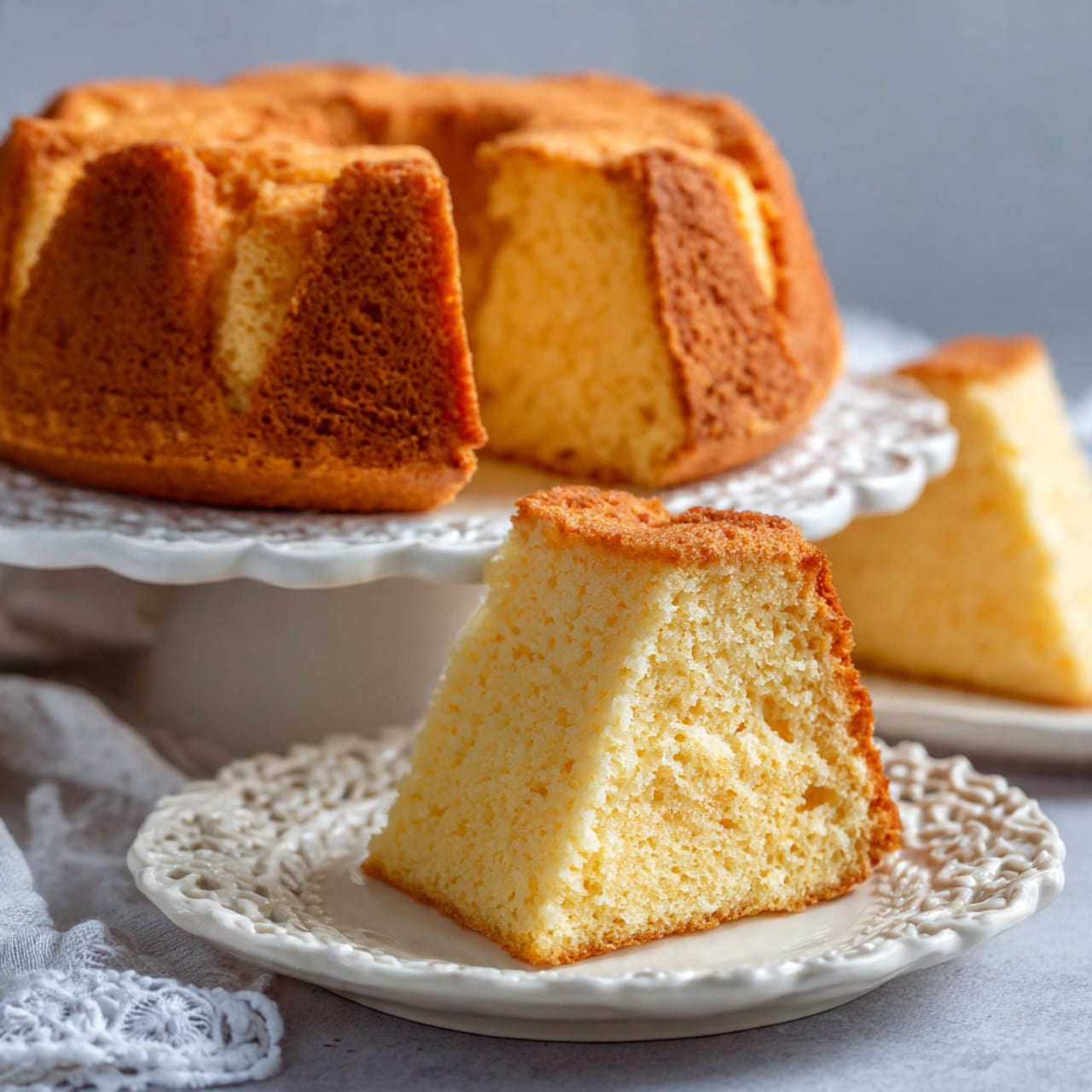
This rich, soft, and fluffy butter cake delivers pure comfort in every bite. With a tender crumb and a buttery glaze that soaks into the cake, it stays moist for days and develops a lightly crisp, donut-like coating on the outside. Simple ingredients and an old-fashioned method make this cake timeless, reliable, and perfect for any occasion.
Why You’ll Love This Recipe
This butter cake is incredibly moist thanks to the warm glaze poured over it straight from the oven. The texture is soft yet sturdy, making it ideal for slicing and serving without the need for frosting or decoration. It’s made with everyday pantry staples, comes together easily, and tastes even better the next day. Whether for a gathering, celebration, or casual dessert, this cake always impresses with minimal effort.
Ingredients
(Tip: You’ll find the full list of ingredients and measurements in the recipe card below.)
For the cake
3 cups all-purpose flour (360 g)
1 teaspoon salt
3/4 teaspoon baking powder
1/2 teaspoon baking soda
1 cup unsalted butter, softened (227 g)
2 cups granulated sugar (400 g)
4 large eggs, at room temperature
1 cup whole milk (240 ml)
For the glaze
5 tablespoons unsalted butter (70 g)
3/4 cup granulated sugar (150 g)
1/4 cup water (60 ml)
1 1/2 teaspoons vanilla extract
Directions
Preheat the oven to 325°F (165°C). Generously butter and flour a 10- to 12-cup Bundt pan, making sure all the grooves are well coated.
In a large bowl, whisk together the flour, salt, baking powder, and baking soda. Set aside.
In a stand mixer fitted with a paddle attachment or a large mixing bowl using a hand mixer, beat the butter and sugar on medium speed for 3 to 4 minutes until light and fluffy. Scrape down the sides of the bowl as needed.
Add the eggs one at a time on low speed, beating well after each addition until fully incorporated.
With the mixer on low speed, add the dry ingredients in three additions, alternating with the milk. Begin and end with the flour mixture. Mix just until combined, being careful not to overmix.
Spoon the batter evenly into the prepared Bundt pan and gently tap the pan on the counter to release any air bubbles.
Bake for about 1 hour, or until a wooden skewer inserted near the center comes out clean.
While the cake finishes baking, prepare the glaze. In a small saucepan, combine the butter, sugar, and water. Bring to a gentle simmer over medium heat, stirring constantly. Cook for about 2 minutes until the mixture looks opaque and slightly thickened. Remove from the heat and stir in the vanilla extract.
As soon as the cake comes out of the oven, slowly pour the warm glaze evenly over the cake while it is still in the pan. Allow the cake to rest for 15 minutes, then carefully invert it onto a wire rack. Let cool completely before serving.
Servings and timing
Servings: 12 slices
Prep time: 20 minutes
Bake time: 60 minutes
Cooling time: 30 minutes
Total time: approximately 1 hour and 50 minutes
Variations
For a citrus twist, add 1 tablespoon of lemon or orange zest to the batter and replace half of the vanilla in the glaze with fresh citrus juice.
For a nutty version, sprinkle finely chopped walnuts or pecans over the glaze while the cake is still warm.
For a warm spice note, add 1/2 teaspoon ground cinnamon to the dry ingredients.
For a dairy-rich flavor, replace half of the milk with plain yogurt or sour cream.
Storage/Reheating
Once completely cooled, store the butter cake covered at room temperature for up to 5 days. The glaze helps lock in moisture, so refrigeration is not necessary.
To freeze, wrap the whole cake or individual slices tightly in plastic wrap, then in foil, and freeze for up to 3 months. Thaw overnight at room temperature before serving.
If you prefer the cake slightly warm, gently heat individual slices for a few seconds before serving.
FAQs
What makes this cake different from a regular butter cake?
This cake is finished with a hot butter glaze that soaks into the crumb, giving it exceptional moisture and a lightly crisp exterior.
Is this the same as pound cake?
No, pound cake uses equal weights of butter, sugar, eggs, and flour. This butter cake has different ratios, resulting in a lighter and softer texture.
Can I bake this cake without a Bundt pan?
Yes, you can use a tube pan or divide the batter between two loaf pans, adjusting the baking time as needed.
How do I know when the cake is done?
Insert a wooden skewer or toothpick near the center. If it comes out clean or with a few dry crumbs, the cake is ready.
Can I reduce the sugar?
Reducing the sugar will affect both texture and moisture. It’s best to keep the measurements as written for optimal results.
Why should the eggs be at room temperature?
Room-temperature eggs blend more easily into the batter, creating a smoother texture and preventing overmixing.
Can I make this cake ahead of time?
Yes, this cake actually tastes better the next day as the glaze continues to settle into the crumb.
Does the glaze make the cake soggy?
No, the glaze absorbs gradually and enhances moisture without making the cake wet or heavy.
Can I add toppings after baking?
Yes, powdered sugar, fresh fruit, or a light drizzle of chocolate can be added just before serving.
Is this cake suitable for special occasions?
Absolutely. Its golden crust, rich flavor, and elegant shape make it ideal for gatherings, holidays, and celebrations.
Conclusion
This butter cake is a classic dessert that never goes out of style. With its tender crumb, rich buttery flavor, and signature glaze, it delivers bakery-quality results using simple ingredients and straightforward steps. Whether served plain or dressed up with toppings, it’s a dependable recipe you’ll return to again and again.
A rich, soft, and fluffy butter cake topped with a buttery glaze that soaks into the cake, giving it a moist texture and lightly crisp exterior. Perfect for any occasion, this cake is simple, comforting, and sure to impress.
Author:Sophia
Prep Time:20 minutes
Cook Time:60 minutes
Total Time:1 hour 50 minutes
Yield:12 slices
Category:Dessert
Method:Baked
Cuisine:American
Diet:Vegetarian
Ingredients
3 cups all-purpose flour (360 g)
1 teaspoon salt
3/4 teaspoon baking powder
1/2 teaspoon baking soda
1 cup unsalted butter, softened (227 g)
2 cups granulated sugar (400 g)
4 large eggs, at room temperature
1 cup whole milk (240 ml)
5 tablespoons unsalted butter (70 g) (for glaze)
3/4 cup granulated sugar (150 g) (for glaze)
1/4 cup water (60 ml) (for glaze)
1 1/2 teaspoons vanilla extract (for glaze)
Instructions
Preheat oven to 325°F (165°C). Grease and flour a 10- to 12-cup Bundt pan.
In a bowl, whisk together flour, salt, baking powder, and baking soda. Set aside.
In a stand mixer, beat butter and sugar on medium for 3-4 minutes until light and fluffy. Add eggs one at a time, beating after each addition.
Alternately add dry ingredients and milk, starting and ending with the dry ingredients. Mix until just combined.
Pour batter into prepared Bundt pan, tap to release air bubbles. Bake for about 1 hour, or until a skewer comes out clean.
For the glaze, combine butter, sugar, and water in a saucepan. Simmer for 2 minutes, then stir in vanilla. Pour glaze over the warm cake.
Let cake rest for 15 minutes, then invert onto a wire rack. Cool completely before serving.
Notes
Add lemon or orange zest to the batter for a citrus twist.
For a nutty flavor, sprinkle chopped walnuts or pecans on top of the glaze.
For a warm spice note, add 1/2 teaspoon cinnamon to the dry ingredients.
Replace half the milk with sour cream or yogurt for a richer flavor.