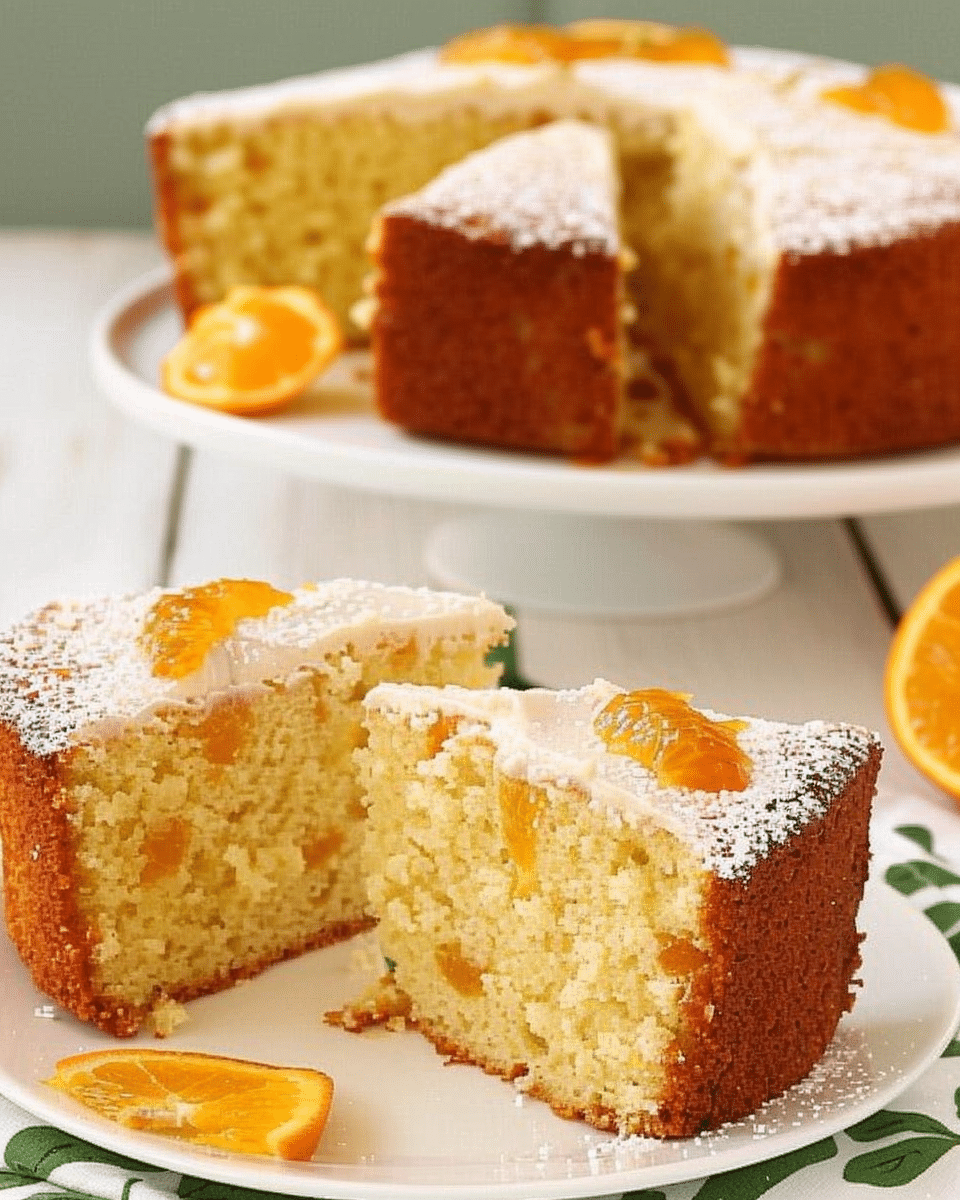
This Greek-inspired orange semolina cake is soft, moist, and deeply aromatic with fresh citrus. Made with fine semolina flour and finished with a glossy orange syrup and creamy Greek yoghurt, it delivers a beautifully balanced dessert that feels both comforting and elegant.
Why You’ll Love This Recipe
This cake stands out for its unique texture and bright flavor. Semolina gives it a gentle bite while keeping it tender and moist. Fresh orange juice and zest infuse every layer with citrus, and the light syrup soaks in just enough to make each slice luscious without being heavy. It’s easy to prepare, perfect for make-ahead entertaining, and works just as well for afternoon tea as it does for dessert.
Ingredients
(Tip: You’ll find the full list of ingredients and measurements in the recipe card below.)
For the cake
160 g fine semolina flour
130 g plain flour
2 teaspoons baking powder
1 pinch salt
100 ml fresh orange juice
Zest of 2 medium oranges, finely grated
½ teaspoon vanilla extract
226 g unsalted butter, softened
250 g white granulated sugar
3 large eggs, at room temperature
For the orange syrup
100 ml fresh orange juice
100 g white granulated sugar
For the topping
180 g natural Greek yoghurt (¾ cup)
30 g crushed pistachios (about a small handful)
Directions
Preheat the oven to 180°C (350°F) or 160°C fan-forced. Grease and line an 8-inch springform cake tin with baking paper.
In a medium bowl, whisk together the semolina flour, plain flour, baking powder, and salt until evenly combined.
In a separate small bowl, mix the orange juice, orange zest, and vanilla extract. Set aside.
In a large mixing bowl, beat the softened butter and sugar together until very pale, light, and fluffy. Scrape down the sides of the bowl as needed.
Add the eggs one at a time, beating well after each addition and scraping down the bowl to ensure everything is fully incorporated.
On low speed or using a spatula, gently fold in one-third of the dry ingredients, followed by half of the orange mixture. Repeat with another third of the dry ingredients, the remaining orange mixture, and finish with the last of the dry ingredients. Mix only until just combined.
Transfer the thick batter into the prepared tin and smooth the top. Bake for 40 to 45 minutes, or until a toothpick inserted into the center comes out with only a few moist crumbs.
Allow the cake to rest for 5 minutes, then remove it from the tin and cool completely on a wire rack.
To make the syrup, place the orange juice and sugar in a small saucepan over low heat. Stir gently until the sugar has completely dissolved, then bring to a gentle simmer. Let it cook for 1 to 2 minutes until reduced by about half. Remove from heat and allow to cool.
Once the cake is completely cool, prick the surface all over with a fork. Pour about half of the cooled syrup evenly over the cake, spreading it gently if needed.
Spread the Greek yoghurt over the top and sprinkle with crushed pistachios. Serve with the remaining syrup on the side.
Servings and timing
This cake serves 12 slices.
Preparation time is approximately 20 minutes.
Baking time is 40 to 45 minutes.
Total time from start to finish is about 1 hour.
Variations
You can replace the orange juice and zest with lemon for a bright lemon semolina cake.
For a nutty twist, substitute 50 g of the plain flour with finely ground almond flour.
If you prefer a lighter finish, drizzle honey over the cake instead of using the orange syrup.
Top with toasted almonds instead of pistachios for a different crunch and flavor profile.
Storage/Reheating
Store the cake covered in the refrigerator for up to 4 days due to the yoghurt topping.
For best texture, allow refrigerated slices to sit at room temperature for 15 to 20 minutes before serving.
This cake does not require reheating, but it can be gently warmed without the yoghurt topping if desired.
FAQs
Can I make this cake a day ahead?
Yes, this cake actually improves with time as the syrup absorbs into the crumb.
What type of semolina should I use?
Fine semolina flour is essential for a soft, even texture.
Can I freeze this cake?
You can freeze the cake without the yoghurt topping for up to 2 months.
Why does my batter look slightly split?
This is normal due to the citrus juice and eggs and will not affect the final cake.
Can I use bottled orange juice?
Fresh orange juice is strongly recommended for the best flavor.
Is this cake very sweet?
No, the sweetness is balanced by citrus and tangy yoghurt.
Can I bake this in a regular cake pan?
Yes, but ensure it is well-lined and deep enough to prevent overflow.
What can I use instead of Greek yoghurt?
You can serve the cake plain or with lightly sweetened whipped cream.
Does semolina make the cake dense?
It gives structure but keeps the cake soft and moist when combined correctly.
Can I reduce the sugar?
You can slightly reduce the sugar, but it may affect moisture and texture.
Conclusion
This Greek orange semolina cake is a beautiful balance of softness, citrus brightness, and gentle sweetness. With its unique texture and elegant finish, it’s a reliable recipe that feels special yet approachable. Whether served for guests or enjoyed with a quiet cup of tea, it’s a cake that delivers comfort and flavor in every slice.
Greek Orange Semolina Cake with Orange Syrup is a moist, tender dessert infused with fresh citrus and made with fine semolina flour. Topped with creamy Greek yoghurt and pistachios, and finished with a glossy orange syrup, it’s elegant, comforting, and full of Mediterranean flavor.
Author:Sophia
Prep Time:20 minutes
Cook Time:45 minutes
Total Time:1 hour
Yield:Serves 12
Category:Dessert
Method:Baking
Cuisine:Greek
Diet:Vegetarian
Ingredients
160 g fine semolina flour
130 g plain flour
2 teaspoons baking powder
1 pinch salt
100 ml fresh orange juice
Zest of 2 medium oranges, finely grated
½ teaspoon vanilla extract
226 g unsalted butter, softened
250 g white granulated sugar
3 large eggs, at room temperature
Orange Syrup: 100 ml fresh orange juice, 100 g white granulated sugar
Topping: 180 g natural Greek yoghurt (¾ cup), 30 g crushed pistachios (about a small handful)
Instructions
Preheat oven to 180°C (350°F) or 160°C fan-forced. Grease and line an 8-inch springform cake tin with baking paper.
In a bowl, whisk together semolina flour, plain flour, baking powder, and salt.
In a separate bowl, combine orange juice, zest, and vanilla extract.
In a large mixing bowl, beat butter and sugar until pale and fluffy. Scrape down sides as needed.
Add eggs one at a time, beating well after each addition.
On low speed or using a spatula, fold in 1/3 of the dry ingredients, then half of the orange mixture. Repeat, ending with dry ingredients. Mix until just combined.
Transfer batter to prepared tin and smooth the top. Bake for 40–45 minutes, or until a toothpick inserted in the centre comes out with a few moist crumbs.
Cool in tin for 5 minutes, then remove and cool completely on a wire rack.
For the syrup, combine orange juice and sugar in a small saucepan over low heat. Stir until sugar dissolves, then simmer for 1–2 minutes until slightly reduced. Let cool.
Once cake is fully cooled, prick surface with a fork and pour half the syrup over the top evenly.
Spread Greek yoghurt over the cake and sprinkle with crushed pistachios. Serve with remaining syrup on the side.
Notes
Substitute lemon for orange for a citrus variation.
Replace some plain flour with almond flour for nuttiness.
Top with toasted almonds instead of pistachios if preferred.
Use honey instead of syrup for a lighter, floral finish.
Cake improves with time as syrup absorbs—great make-ahead option.