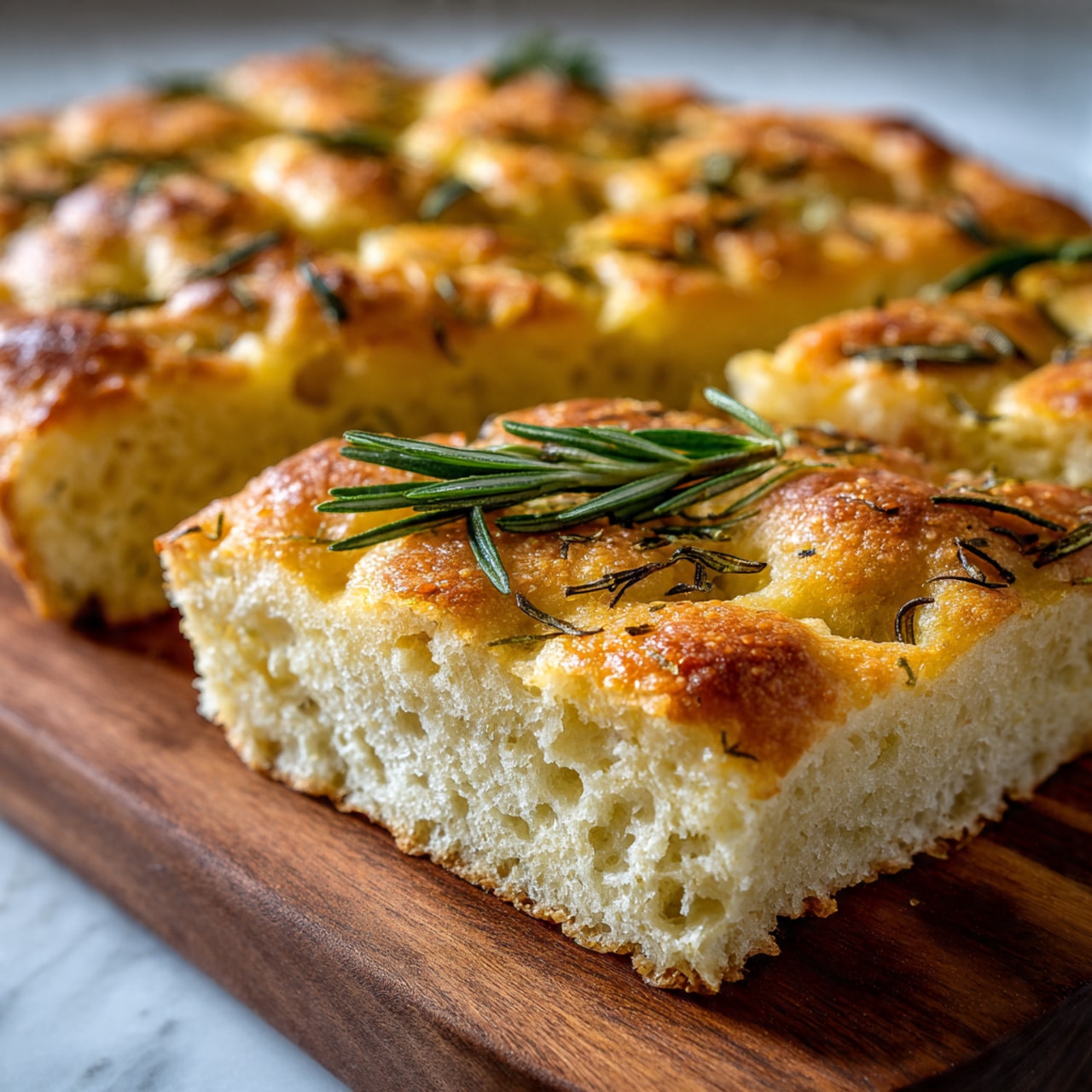
This traditional Italian focaccia bread with rosemary is light, airy, and full of rich olive oil flavor. Made with a simple no-knead method and an overnight rest, it develops incredible texture and taste with very little effort. Perfect as a side, snack, or sandwich base, this focaccia is both rustic and impressive.
Why You’ll Love This Recipe
This focaccia recipe is incredibly easy and beginner-friendly thanks to the no-knead method. The long, slow fermentation creates a soft interior with beautiful air pockets while the outside bakes up golden and crisp. It uses simple pantry ingredients, requires minimal hands-on time, and delivers authentic Italian flavor. Whether served plain or topped with rosemary and sea salt, it’s always a crowd-pleaser.
Ingredients
(Tip: You’ll find the full list of ingredients and measurements in the recipe card below.)
Bread flour – 4 cups (500 g)
Kosher salt – 2 teaspoons
Instant yeast – 1 teaspoon
Lukewarm water – 1¾ cups (415 ml)
Extra virgin olive oil – 4 tablespoons, divided
Flaky sea salt – 1 teaspoon, for topping
Fresh rosemary – 1 to 2 tablespoons, finely chopped
Directions
In a large mixing bowl, add the bread flour, kosher salt, and instant yeast. Stir to combine evenly. Pour in the lukewarm water and 2 tablespoons of olive oil. Mix using a wooden spoon or spatula until a sticky, shaggy dough forms and no dry flour remains.
Cover the bowl with plastic wrap or a clean towel and let the dough rest at room temperature for 30 minutes.
After resting, transfer the covered dough to the refrigerator and allow it to ferment for at least 18 hours and up to 48 hours.
Generously grease a 9×13-inch baking pan with olive oil. Transfer the cold dough into the pan and gently stretch it toward the edges. If it resists, let it rest for 10 minutes and continue stretching. Cover and let rise at room temperature for 2 to 4 hours, until doubled in size and bubbly.
Preheat the oven to 425°F (220°C). Drizzle the remaining 2 tablespoons of olive oil over the dough. Using oiled fingers, press deep dimples all over the surface. Sprinkle evenly with flaky sea salt and chopped rosemary.
Bake for 25 to 30 minutes, until deeply golden and crisp on top. Remove from the oven and allow to cool slightly before slicing.
Servings and timing
Servings: 12 slices
Prep time: 10 minutes
Resting and fermentation time: 18–24 hours
Cooking time: 30 minutes
Total time: approximately 24 hours
Variations
Add halved cherry tomatoes pressed gently into the dough before baking.
Sprinkle grated parmesan or mozzarella over the top for a cheesy focaccia.
Top with thinly sliced onions for a sweet, savory flavor.
Add roasted garlic cloves for deeper aroma and taste.
Finish with sesame seeds or nigella seeds for extra texture.
Storage/Reheating
Store leftover focaccia in an airtight container at room temperature for up to 2 days. For longer storage, wrap slices tightly and freeze for up to 3 months.
To reheat, warm in a 350°F (175°C) oven for 8–10 minutes until heated through and crisp. Avoid microwaving, as it softens the crust.
FAQs
Can I skip the overnight fermentation?
Yes, but the flavor and texture will be less developed. A minimum of 3 hours at room temperature can work in a pinch.
Why is my dough so sticky?
Focaccia dough is meant to be very wet. This hydration creates the airy crumb and soft interior.
Can I use all-purpose flour instead of bread flour?
Yes, all-purpose flour works, but bread flour gives a chewier texture and better structure.
How do I prevent focaccia from sticking to the pan?
Use plenty of olive oil when greasing the pan. It also enhances flavor and crispness.
Can I make this dough ahead of time?
Yes, the dough can stay in the refrigerator for up to 48 hours before baking.
How do I get large air bubbles?
Handle the dough gently and avoid over-stretching after it has risen.
Can I bake focaccia in a different pan size?
Yes, but thickness and baking time will vary. A larger pan makes thinner focaccia.
Is fresh rosemary better than dried?
Fresh rosemary gives better aroma and flavor, but dried can be used in smaller amounts.
Can I freeze baked focaccia?
Yes, freeze fully cooled slices tightly wrapped for best results.
Why is my focaccia dense?
The dough may not have risen long enough, or the yeast may be inactive.
Conclusion
This traditional Italian focaccia bread with rosemary is a simple yet rewarding recipe that delivers bakery-quality results at home. With minimal effort and a slow fermentation, you’ll get a beautifully textured bread that’s crisp, flavorful, and endlessly versatile. Whether enjoyed fresh from the oven or reheated the next day, this focaccia is sure to become a staple in your kitchen.
This traditional Italian focaccia bread with rosemary is light, airy, and full of olive oil flavor. Made with a simple no-knead, overnight method, it’s perfect as a side, snack, or sandwich base.
Author:Sophia
Prep Time:10 minutes
Cook Time:30 minutes
Total Time:24 hours
Yield:12 slices
Category:Bread
Method:Baking
Cuisine:Italian
Diet:Vegan
Ingredients
4 cups (500 g) bread flour
2 teaspoons kosher salt
1 teaspoon instant yeast
1¾ cups (415 ml) lukewarm water
4 tablespoons extra virgin olive oil, divided
1 teaspoon flaky sea salt, for topping
1 to 2 tablespoons fresh rosemary, finely chopped
Instructions
In a large bowl, mix bread flour, kosher salt, and instant yeast. Add lukewarm water and 2 tablespoons of olive oil. Stir until a sticky dough forms and no dry flour remains.
Cover the bowl and let the dough rest at room temperature for 30 minutes.
Transfer the dough to the refrigerator, covered, and let it ferment for 18 to 48 hours.
Grease a 9×13-inch baking pan with olive oil. Transfer the cold dough into the pan and gently stretch it toward the edges. Let rest 10 minutes if it resists stretching. Cover and let rise at room temperature for 2 to 4 hours until doubled and bubbly.
Preheat oven to 425°F (220°C). Drizzle remaining 2 tablespoons olive oil over the dough. Dimple the dough with oiled fingers. Sprinkle with flaky sea salt and rosemary.
Bake for 25 to 30 minutes until golden and crisp. Let cool slightly before slicing and serving.
Notes
Overnight fermentation improves flavor and texture significantly.
Use bread flour for best results, but all-purpose flour can be substituted.
Fresh rosemary is preferred for better aroma and flavor.
Use plenty of olive oil to prevent sticking and enhance crispness.
Store tightly wrapped and reheat in oven for best texture.